

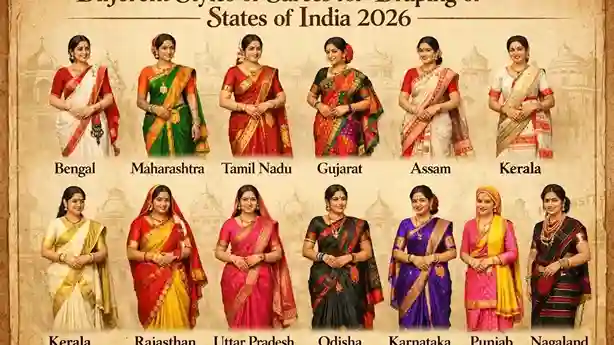
Different styles of Sarees for Draping of States of India 2026
The Saree is a classic garment made of a single strip of fabric that represents the history, culture, and spirit of India. Although the six-to-nine-yard fabric remains the same but the way it’s draped changes drastically across states. Every pleat, fold, and pallu’s position will tell a story about the region’s climate, culture, and the daily routine. As we move into 2026, these drapes go beyond fashion as they are also powerful symbols of the identity of a region in a globalized world.
Have you ever wondered why a saree worn in Maharashtra is different from one that is in Bengal? The answer lies in the intricate Indian traditions. The exploration of the various styles of the state saree is like a trip through the midst of India, discovering the way that functionality and art are interwoven. This guide will lead us through some of the famous saree draping styles of all the States of India and will highlight the unique beauty and cultural significance of each.
The Nivi Drape, the Universal Style from Andhra Pradesh
When people imagine a saree, they think of it as the Nivi drape. It is a style that originated in Andhra Pradesh. This style has gone beyond its regional roots to be the most recognizable and widely used method of wearing a saree throughout India and across the globe.
Its style is stylish and practical. The style has pleats, neatly tucked into top of the petticoat with the decorative end, also known as pallu, draped elegantly across the shoulder of one’s left. This technique beautifully highlights the shape of the wearer while permitting a comfortable and relaxed movement. Its appeal to everyone is the reason the Nivi is now the norm for every type of wear, from everyday to fashion-forward, and is now a standard different state saree design.
The Atpoure Shari: The Regal Drape of West Bengal
This Bengali Atpoure Shari can be immediately recognized and exudes an aura of class and elegance. Traditionally, the drape is white, with a striking red border. The drape is worn at festivals such as Durga Puja.
In contrast to the Nivi Atpoure, which is a different style has broad pleats on the front. The most distinctive feature is the pallu that is carried from the back towards the front, on both sides. The pallu’s end is then placed over the shoulder of right shoulder and often has a decorative keychain, which symbolizes the woman’s position as the chief of the family. The drape is loose and does not cling to the figure, but instead provides luxury and comfort.
The Nauvari A Warrior’s Drape in Maharashtra
The Nauvari, which means 9 yards, is a significant symbol of Maharashtrian tradition and culture. This distinctive saree in a different state’s style is also referred to as the Kashta drape.
What makes the Nauvari stand out is the fact that it’s worn like a dhoti, or pants, but without a Petticoat. A small portion of the nine-yard fabric is slid between the legs, and then tucked into the back of the body, giving you a lot of freedom of movement. In the past, this drape permitted Maratha ladies to go on horseback, and even fight in fights. In 2026, the Nauvari is praised for its sexy, feminist tradition and is a favorite selection for weddings as well as cultural events.
The Seedha Pallu: The Functional Style of Gujarat and Uttar Pradesh
The seedha Pallu style provides a gorgeous as well as practical option to the Nivi drape. It is popular throughout Gujarat, Uttar Pradesh, and parts of Odisha. This method carries the pallu from behind towards the front, over the shoulder to the right.
Its “front-facing” pallu lets the intricate work of the saree’s hem be prominently displayed across the body. It’s a very practical design, since the pallu could be utilized to protect the head, or to tie around the waist, leaving hands free. For sarees that are heavily embellished, like Bandhanis or Banarasis, this drape is ideal since it helps keep its weight on the front rather than pulling the shoulders.
The Mekhela Sador: The Two-Piece Wonder of Assam
In the Indian state of Assam is from the state of Assam comes Mekhela Sador, an exquisite and extremely practical two-piece outfit that resembles the Sari.
It is made up of the Mekhela, that is a cylinder skirt with a skirt-like bottom, which is pleated and tied in with the Sador, the longer piece of cloth wrapped over the top of the body and secured to the shoulder. The pleats on the Mekhela tend to be on the right-hand side, which makes it distinct from other types of. This two-piece structure makes it extremely comfortable to wear and handle, which makes it a favorite daily outfit for Assamese women.
The Madisar, The Drape that is the traditional one of Tamil Nadu
The Madisar is a significant saree of a different state to the Brahmin community of Tamil Nadu. With a minimum of 9 yards of cloth, it is among the more difficult drapes that you can learn to master.
Similar to the Nauvari, the lower part is covered in a dhoti-like manner; however, the design differs in design and pleating. It was traditionally the dress women wore after following wedding. The Madisar is regarded as significant in spiritual terms and is the dress code for significant rituals and religious ceremonies. The Madisar’s distinctive design is a symbol of a mix of feminine and masculine energy.
The Coorgi Style: The Hillside Drape of Karnataka
The Coorgi style is derived from Coorg, which is located in the Kodagu district (Coorg) located in Karnataka. The Coorgi fashion is testimony to a fabric changing to fit the surroundings.
Its most distinctive characteristic is that pleats are tied towards the back, not the front. The pallu is positioned underneath the left arm and is secured to the right shoulder using a knot or brooch. The design originated because of necessity, in that it stopped women from falling over their sarees when they walked the rocky hills of the region. It’s a clean, well-secured, safe, and elegant style that is contemporary and timeless.
The Kunbi Drape: The Tribal Legacy of Goa
Before Goa was a renowned tourist spot, it was the home of the Kunbi tribe. Their attire reflects a lifestyle of work-hardiness and simplicity.
It is important to note that the Kunbi drape is a bit shorter and ends at the ankles. This was crucial for women who worked in the paddy fields. The saree is tucked tightly around the waist and tied by a strong knot around the shoulder, not requiring pins. The fabric is usually an extremely durable cotton with simple checkered patterns. The designers of 2026 are trying to revive the Kunbi fabric and drape that celebrates its simple and sustainable design.
Wrapping Up: This is the Saree as a Map of India
The saree offers more than just clothes. It’s a map of the culture of India. Every state’s saree design gives a glimpse into the history, traditions, and culture of the people. From the stance of a warrior in the Maharashtrian Nauvari to the regal beauty that is the Bengali Atpoure, each drape has an interesting tale to share.
read about – saree draping meaning
Fashion trends change, but the regional draping fashions remain a proud symbol of the past. They show us that true fashion is usually rooted in the identity of and the purpose behind. If you are planning to purchase a saree, you might want to consider the drape of a different state. You won’t just be trying out a new style but also interacting with an exclusive piece of India’s vast and varied cultural fabric.


wish you best and best