Skip to content
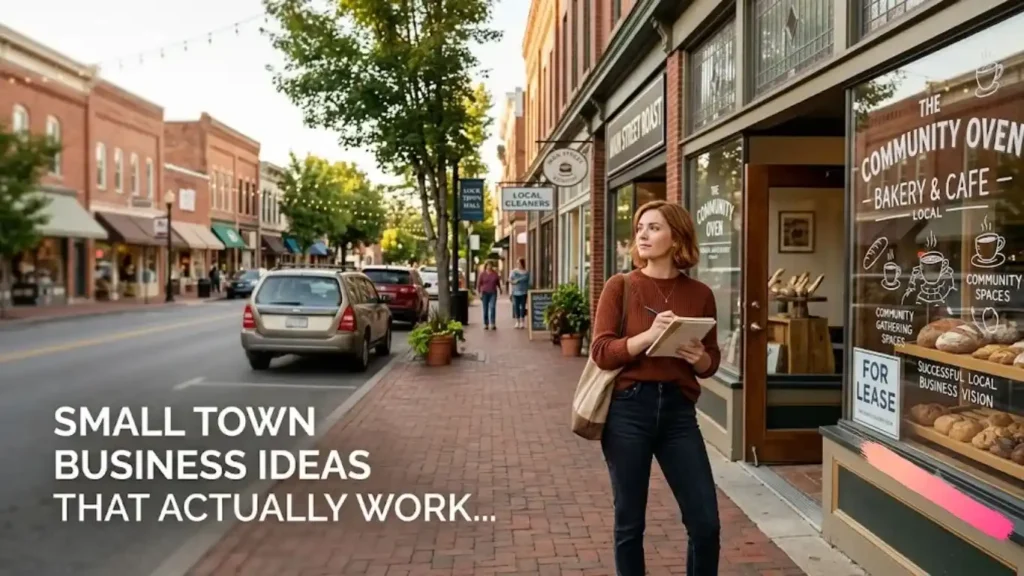
There’s an empty storefront on Main Street. You’ve driven past it a hundred times, picturing your name on the window. Maybe a coffee shop. Maybe a little bakery.
The truth is that most people discover way too late: small-town enterprises seldom fail because the concept was not right. They failed because they did not have the right idea for the specific town. Make the right choice, and you’ll have something that your neighbors will never be able to endure without. Pick wrong, and you’ll quietly watch your savings disappear by spring.
Let’s make sure you pick right.
Why Some Small-Town Businesses Thrive While Others Sit Empty by Spring
In a small town, you have fewer customers. That means less room for error. One slow season can sink you.
So the winning question isn’t “Is this a cool idea?” It’s “Will people come back?”
Consider the possibilities. A fun novelty store might draw crowds on the opening weekend. Each person visits once, purchases an item, then never returns. In the meantime, the bakery down the street is filled with the same customers on a Saturday.
That’s the whole game. Repeat customers beat foot traffic every single time in a small market. Businesses built on habit and need survive. Businesses built on novelty burn out fast.
How to Read Your Town Before You Bet on It
Not all small towns are the same, and that changes everything. A brilliant idea in one town flops fifteen miles down the road. So before anything else, figure out what kind of town you actually live in.
Tourist towns. Visitors want treats and keepsakes. Ice cream shops, gift stores with local merch, and bed and breakfasts do well. Just plan for the quiet off-season. If lodging interests you, it helps to understand what types of hospitality businesses entrepreneurs start before you commit.
Commuter towns. People rush out early and drag themselves home tired. Grab-and-go coffee, breakfast spots, and daycare thrive here. Your hours matter more than your menu.
Agricultural and rural towns. Practical wins. Hardware stores, small engine repair, feed supply, and auto shops stay busy because folks genuinely need them.
Retirement-heavy towns. Comfort and convenience sell. Home cleaning, pet grooming, handyperson services, and delivery are gold.
College towns. Budget matters. Tutoring, thrift stores, cheap eats, and printing services fit the rhythm of the school year.
Highway and pass-through towns. Traffic never stops, but it doesn’t linger. Gas stations, quick food, and towing capture people who won’t stick around.
The Small-Town Business Ideas Worth Your Time

Here are the best small town business ideas, sorted the way you actually think about them.
Low-cost ideas you can start with little money
Cleaning services, lawn care, tutoring, mobile car detailing, and handyman work barely need startup cash. You skip the expensive lease and heavy inventory. For first-timers wondering how to make money in a small town without gambling your savings, service businesses are the safest door in.
Businesses you can run from home
Baking, consulting, photography, pet grooming, and website building all work from a spare room. Low overhead, flexible hours, slower risk. Some of these even edge toward businesses that run themselves for passive income once you build systems and repeat clients.
Ideas with steady, repeat revenue
Coffee shops, bakeries, gyms, daycares, and grooming keep people coming back on a schedule. That recurring income is your safety net when the town gets quiet.
Ideas that can grow beyond your town
A boutique with an online store, a vintage resale shop, or a specialty food brand can sell to your neighbors and the whole internet. Your population counts no longer trap you.
Essential-need businesses that every town relies on
Grocery stores, pharmacies, hardware stores, and auto repair are boring on paper and beautiful in practice. They’re steady, recession-resistant, and hard for big chains to fully replace locally.
A Simple Way to Score Any Idea Before You Commit
Before you sign anything, run your idea through this quick scorecard. Rate each from low to high.
- Startup cost — How much cash to open the doors?
- Demand stability — Is it a need or a novelty?
- Competition risk — Empty market or crowded one?
- Seasonality — Year-round income or weather-dependent?
- Solo-friendly — Can you run it alone, or do you need staff you can’t find?
An idea that scores well across all five is worth chasing. One that stumbles on three should scare you.
Quick gut-checks people always wonder about: a food truck costs far less than a restaurant. A bakery gets more repeat visits than a novelty coffee gimmick. Mobile detailing beats a fixed car wash on startup costs. These small comparisons save big money.
How to Know Your Town Actually Needs This
The costliest mistake is assuming demand instead of proving it. Good news: you can test your idea this week for free.
- Read local Facebook groups. People constantly complain about what’s missing. “Wish we had a decent lunch spot” is market research handed to you.
- Mine Google reviews of nearby businesses. Look for the “I wish they offered…” comments. That gap is your opening.
- Ask 20 neighbors one honest question and listen.
Then pilot small. Run a weekend pop-up. Take preorders. Set up one market stall. Let real customers prove the idea before you buy equipment. If you need timing inspiration, Small Business Saturday ideas are a great low-risk way to test a concept with a built-in crowd.
The Ideas That Look Tempting but Quietly Fail Here
Avoiding the wrong idea matters as much as picking the right one.
- Foot-traffic-dependent businesses need the crowds your town doesn’t have.
- Novelty retail gets one visit per customer, then goes silent.
- Inventory-heavy stores tie up your cash in shelves that don’t turn over.
These are the quiet savings-drainers. Beautiful dreams, brutal math.
Winning Customers When You Only Have a Few Thousand of Them
Word of mouth is your real marketing budget. One great impression spreads faster in a small town than any billboard ever could.
So become part of the community, not just a business in it. Sponsor the Little League team. Partner with the shop next door. Show up at local events.
Then handle the simple online stuff: a clean Google Business Profile, an active local social page, and easy online ordering: small moves, big returns.
Turning One Idea Into a Business That Lasts
Smart owners fill slow hours by stacking ideas. Coffee shop by day, wine bar by night. Bakery plus catering. Bookstore plus events and gifts. Lawn care plus snow removal in winter.
You can also add revenue without adding rent — delivery, subscriptions, memberships, or recurring maintenance plans. Same space, more income.
Your First Real Steps From Idea to Open Sign
Pick your idea using the scorecard. Validate demand this month, not “someday.” Run a small pilot before any big spend.
Then build the thing your town genuinely needs and can’t get anywhere else. That’s how you stop dreaming about the storefront and start unlocking it.
Small-Town Business Questions People Actually Ask
What business works best in a town under 5,000 people?
Recurring purchases and essential services such as grocery stores,s repair, cleaning, ng and grooming outdo sales on retail stores that are primarily pedestrian-oriented.
What are the most profitable small-town businesses?
Essential services that are low-overhead and recurring, as they provide the same income and have minimal expenses.
What low-cost business can I start in a rural area?
Lawn care, cleaning Handyman work, tutoring, detail on mobile devices — everything is cheap to start.
How do I know if my town actually needs this business?
Check out Local Facebook pages, look through Google reviews to find gaps, talk to neighbors, and then run a small test at first.
What business can I run from home in a small town?
Baking, consulting, photography, pet grooming, or website building.
Which small-town businesses survive a slow economy?
Groceries, pharmacies, and repair services — people need them no matter what.
How do I compete with Walmart, Amazon, and the chains?
Lean on local trust, personal service, community ties, and speed the giants can’t match.
What businesses should I avoid starting in a small town?
Skip novelty retail, foot-traffic-dependent concepts, and inventory-heavy stores with weak repeat demand.