Skip to content
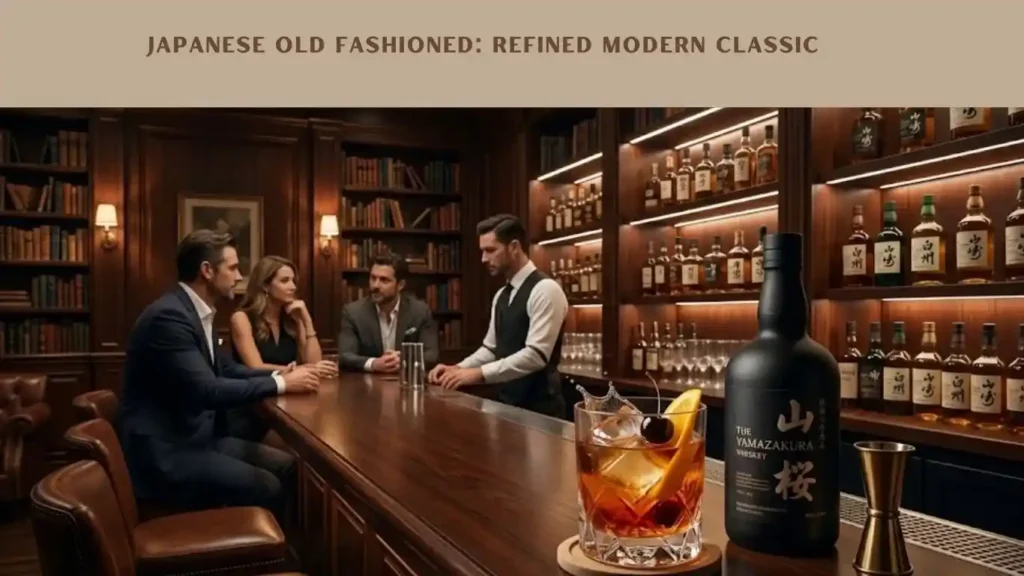
The Japanese old-fashioned is the familiar drink with a fresher, sharper, more refined edge. I like it due to the spirit of the traditional old-fashioned, but whisky adds softer fruit as well as subtle spice. It also has a refined finish that feels elegant, not heavy.
In this article, I’ll explain precisely what makes this drink unique and how I make it at home. In the end, you’ll know:
- What is an old-fashioned Japanese? The most important ingredients are those that have the highest impact.
- How to do it with precision and balance, and the best way to present it in an elegant way
In terms of layout for blogs, this is a good spot to include a memorable image of the final cocktail served in a rocks glass, with a large cube and a lemon twist.
What Is a Japanese Old Fashioned?

The Japanese old-fashioned is a whisky-driven drink that was created with the same spirit as the old-fashioned classic, however,r using Japanese whisky as the main ingredient. This shift in the flavour changes everything. The drink is often lighter in its flavour,t it becomes more aromatic and more complex and layered, with notes of fruit from orchards, honey, soft oak, and delicate spices.
The basic structure remains the same: whisky, sweetener bitters along with ice along with citrus oil. The result, however, is quite distinct. Instead of a powerful,l dark, caramel-driven cocktail, I am able to enjoy something that is more refined and elegant.
That’s the reason people love. The appeal of an old-fashioned Japanese appeal is not about adding more. It’s about making better choices and giving less consideration.
Why the Japanese Old Fashioned Tastes More Refined
Whisky is the primary motive. Japanese whiskies tend to be balanced and harmonious, with subtle floral notes, fruit and a crisp finish. If I stir one into an old-fashioned cocktail, it feels like a smooth, unified drink rather than sluggish and heavy.
The sweetener is also an important part. I usually make use of an easy honey syrup, or even a simple syrup that is clean rather than dark sugar. This keeps the drink clear and lets the whisky communicate clearly. A few drops of bitters as well as a thoughtfully executed citrus peel complete the task.
This cocktail is most effective when there isn’t any strong flavour that overwhelms the base spirit.
How It Differs From a Classic Old Fashioned
A classic old-fashioned typically is richer and deeper in flavour, particularly when paired with bourbon and Rye. It is an old-fashioned Japanese tendency to be more sluggish. I can see greater citrus, lift, and a smoother finish.
The garnish could change as well. Instead of the traditional orange twist, some varieties use grapefruit peels to highlight the whisky’s lighter-colored profile. This may appear to be a minor detail; however,r it alters the taste once the glass touches my face.
If you’re looking for a practical graph of comparison on your blog, this is the perfect location to put in a simple image that displays classic old-fashioned as compared to. Japanese old-fashioned flavour notes.
The Flavourr Profile I Look For
When I design an old-fashioned Japanese one, I’m looking for three things:
- Clarity from whisky
- balance of the sweetener and bitters
- Aroma from the citrus garnish
If the drink is sour, like it is too sweet or muddy, I’m sure I’ve missed the point. The drink should be crisp as well as silky. It should also be a bit slick and logical. The ideal version should not start with a strong hit. This unfolds slowly.
How to Make a Japanese Old Fashioned
Making this drink properly is more about restraint rather than exertion. I don’t require a lot of ingredients; however, I have to take care when measuring. A slight change in bitters or sweetener can alter the flavour of the drink rapidly.
Ingredients for a Japanese Old Fashioned
Here’s the recipe that I have used in one dish:
- 2 tablespoons Japanese whisky
- 1/4 ounce honey syrup, or simple syrup
- 2 to 3 drops of bitters
- 1 large frozen cube of ice
- peel of a grapefruit or an orange to garnish
I usually favour honey syrup as it provides a nice roundness and doesn’t make the drink too heavy. In the event that whisky is already infused with apple or honey notes, the pairing is natural.
Select the Japanese whisky that is easy and balanced. Blends are often great because they are harmonious without excessive smoke or oak. If I choose to use a less fragile bottle, then I make sure to keep the bitters very delicate.
For a visual display, an ingredient flat-lay photograph is ideal here. It can be used together with the bottle,e bitters peel, rocks, and glass.
Step-by-Step Japanese Old Fashioned Method
This is the procedure I use every time:
- Add whisky, syrup, and bitters to the mixing glass.
- Mix the glass up with the ice.
- Mix for 20-25 seconds or until the mixture is well chilled.
- Strain into a glass, topped with a large cube of ice.
- Peel the peel on the glass before dropping it into it, or set it in a neat, clean line on the edge.
This is the way to go. The drink should appear neat and calm. No clutter, no extra garnish, no overbuilt sweetness.
The majority of people rush through this step. Instead, stir the mixture a bit more than you’ll require. The proper dilution softens the edges and allows the aroma to be released.
Best Bitters and Sweeteners to Use
I prefer to keep this simple. Aromatic bitters are great; however, citrus-forward bitters may be even more effective in situations where I’m trying to highlight the freshness of the whisky. Grapefruit bitters can be particularly beneficial in the case of a Japanese old-fashioned since they enhance the drink but don’t make it more aggressive.
To sweeten my diet, I typically select one of these three:
- simple syrup to create an even, neutral balance
- honey syrup to create a soft and smooth texture
- Demerara syrup for a deeper, richer version
If I’m drinking more light Japanese whisky, then I go with honey syrup or simple. Demerara is a possibility, but it is a risk of bringing it closer to the classic Bourbon old-fashioned.
Building Flavour and Refinement in a Japanese Old Fashioned
After the recipe’s basic formula is established, the next step is to refine. This is the point where the cocktail becomes memorable.
Garnish Guidance That Actually Matters
The garnish isn’t just a decoration. It transforms the drink prior to even taking the very first drink. I generally choose grapefruit peels when I need energy and a lift. I prefer orange peels to get a sweeter, warmer aroma.
This is my personal rule: make sure the garnish matches the whisky’s appearance. If the whisky’s profile is ginger, green apple, or mild citrus, grapefruit peel typically is a better fit. If it’s lightly spiced or honeyed, the orange will be more rounded.
A close-up of a process photograph of the expression of citrus oil on the glass would be a great fit for this part.
3 Common Mistakes to Avoid
The recipe is easy; however, it’s easy to make tiny mistakes. I try to avoid these 3 ingredients each time:
- If you use too much sweetener, it suffocates whisky and makes it dull.
- Too many bitters: It makes delicate notes bitter and cloudy.
- Garnishing too much on the glass interferes with the drink’s pure character.
The key is to safeguard the whisky. Every ingredient supporting it must enhance the taste, not conceal it.
Why Whisky Character Matters So Much
An old-fashioned Japanese person depends heavily on the whisky you select. Certain Japanese whiskies are characterised by citrus, white flowers and a gentle grain sweetness. Some blend spices, oak and a hint of smoke. The drinks evolve as each drink is served.
This is why I try the whisky initially on its own. Then, I determine what the drink should have. Sometimes it is a combination of grapefruit and honey syrup bitters. In other cases, it’s a simple syrup and the classic bitters. The extra time makes the drink appear more deliberate.
The clarity of the instructions is important in drinks just as it is in other areas that require skill. Anyone looking for how to make a Wisconsin old-fashioned requires a recipe they can trust. This is the same for a recipe; accuracy makes the recipe practical.
Variations, Serving Ideas, and Blog-Ready Tips
Once I have a good understanding of the traditional design, I can alter it without compromising the spirit of the drink. The most successful variations stick to the original and honour whisky’s character.
5 Elegant Variations I Like to Try
Here are five ways I alter the taste of my drink, but keep it refined:
- Make use of honey syrup instead of simple syrup to get a smoother texture.
- Switch grapefruit peel for orange peel to give a fresher taste.
- Choose a light, smoky Japanese whisky for a deeper flavour.
- Mix in a dash of orange bitters with aromatic bitters.
- It’s best served on a cube that has been cut by hand to make it more attractive.
Every variation alters the drink slightly; there should be no way to overpower whisky. That’s the line I don’t cross.
What to Serve With a Japanese Old Fashioned
This drink shines when served alongside food that has clean, but flavorful flavours. I love mixing it up with
- Grilled Skewers
- roasted nuts
- aged cheese
- Dark chocolate
- seared mushrooms
The balance of the drink is best when paired with food that is rich but not overly sweet. The pairings of savoury and salty are typically the best option.
Presentation Tips for a More Polished Experience
The Japanese old-fashioned presentation is minimalist. I prefer a crystal clear rock glass, a big cube,e as well as a perfectly cut and shaped peel. If the glass gets crowded and the mood changes.
If you’re looking for a WordPress layout or an Elementor layout, I would split the article into 3 points:
- an iconic image of the cocktail in its final form
- a clean ingredient image
- an image of the garnish and final strain
This structure makes the page feel more professional and simple to navigate. The best presentation is exactly the same way for the content, just as it does in a personal fashion. The most effective results typically come from editing and not adding. This is the case when learning how to become a fashion stylist and creating a look that is purposeful.
Conclusion
The Japanese old-fashioned can be an example of the art of balance. It takes a traditional template and makes it smoother and more vibrant, as well as refined by making thoughtful choices with the whisky, sweetener, bitters, and garnish.
If you’re planning to create a great whisky, start with the basics. Select a well-balanced Japanese whisky, employ gentle hands with a hint of sweetness, mix carefully, and let the citrus aroma take over. This is how I create a Japanese old-fashioned, which is contemporary, elegant, and worthy of repeating.
FAQ
What is it that makes the Japanese old-fashioned different from the regular old-fashioned
The main distinction lies in the whisky. The Japanese old-fashioned is made with Japanese whisky that typically has lighter fruits, a delicate flavour, and a more refined taste. The drink is usually more refined and lighter than a version made with bourbon and is particularly enjoyable when it’s coupled with citrus-forward bitters and an exact garnish.
What Japanese whisky is the most suitable to drink for a Japanese old-fashioned?
I generally recommend a balanced Japanese blend that has soft fruit, mild spice, a nd a silky finish. Whiskies that are too sweet or too smoky could alter the flavour. The ideal choice is one that has a strong and distinct flavour, even after stirring and diluting.
Should I add grapefruit peel or orange peel to this cocktail?
Both Botox and Botoxare produced in a similar way, but produce distinct results. Orange peels provide warmth and a sweet taste that is familiar, while grapefruit peels provide the drink a fresher and more pronounced flavour. I decide depending on the whisky’s character and whether I would like the final sip to be soft or more bouncy.
Could I substitute honey syrup instead of plain syrup?
Yes, and I frequently do. Honey syrup gives a smoother texture and more polished sweetness that works well with a variety of Japanese whiskies. It is important to use an easy hand, so that it can support the spirit instead of covering it with more delicate tastes.